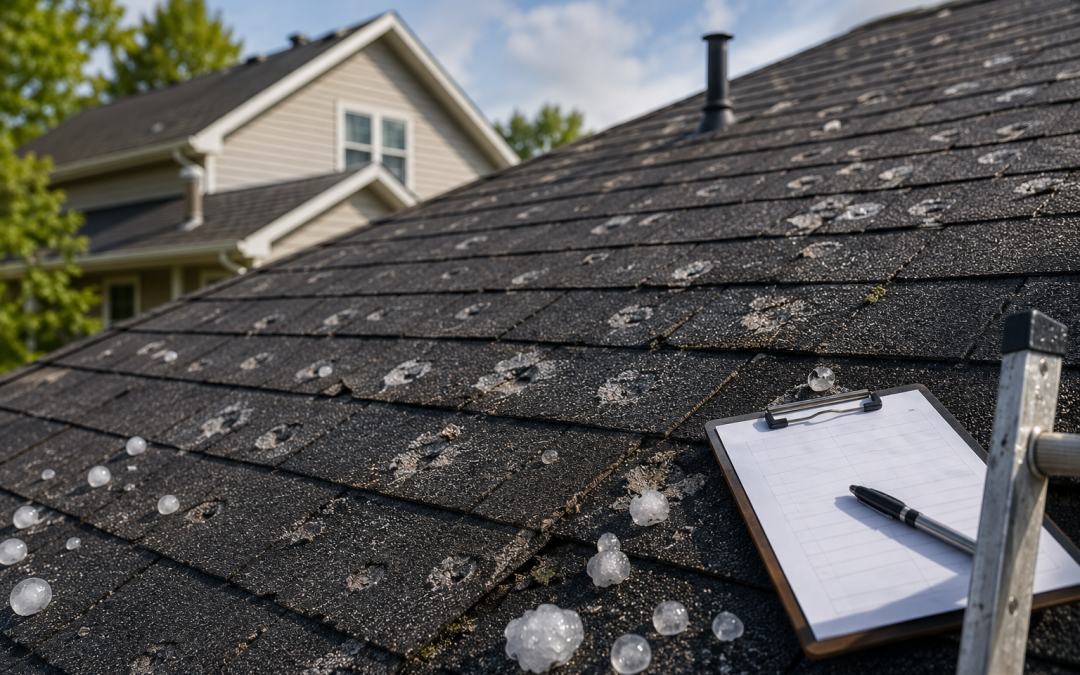
Hail damage is one of the most common causes of roofing problems for homeowners in Barnesville, Georgia, yet it is often overlooked because the damage is not always visible from the ground. Even a brief hailstorm can leave behind hidden issues that weaken your roofing system and increase the risk of leaks, structural deterioration, and premature roof replacement. A professional inspection following hail damage can identify these problems early, helping homeowners in Barnesville, Georgia protect their investment before minor damage develops into costly repairs.
One of the first areas roofing professionals examine after hail damage is the condition of the shingles. Hailstones can strike the roof with enough force to bruise the surface of asphalt shingles, knocking away protective granules that shield the material from ultraviolet rays and weather exposure. These bruises may appear as dark spots or soft areas that are difficult for homeowners to recognize without a close inspection. Once granules are lost, shingles become more vulnerable to heat, moisture, and future storm damage.
Another common sign of hail damage is cracked or fractured shingles. Depending on the size and speed of the hailstones, the impact can weaken the structural integrity of roofing materials without causing immediate leaks. In Barnesville, Georgia, these weakened areas often become more noticeable after additional rainstorms or periods of extreme summer heat. As roofing materials continue to expand and contract, small fractures can grow larger and allow water to penetrate beneath the shingles.
Metal roofing components should also be carefully evaluated after hail damage. Flashing, roof vents, drip edges, and metal valleys frequently show dents that indicate the intensity of the storm. While some dents may appear cosmetic, they can also signal that the roof sustained impacts strong enough to damage less visible areas of the roofing system. A thorough inspection helps determine whether additional repairs are needed to maintain proper weather protection.
Gutters and downspouts provide another indication of hail damage. In Barnesville, Georgia, hail often leaves visible dents or causes granules from asphalt shingles to collect inside gutter systems. Excessive granule loss reduces the roof’s ability to resist ultraviolet exposure and can shorten the lifespan of the roofing materials. Checking gutters after a storm provides valuable information about the overall condition of the roof.
Homeowners should also inspect the interior of their home following hail damage. Water stains on ceilings, damp insulation in the attic, or unexplained moisture around walls may indicate that roof damage has already allowed water to enter the structure. In many cases, interior symptoms appear weeks after the storm, making early roof inspections an important part of protecting the home from more extensive repairs.
Commercial property owners in Barnesville, Georgia face similar concerns. Flat and low slope roofing systems can experience punctures, membrane damage, and seam separation after severe hailstorms. Because commercial roofing systems often cover large surface areas, damage may go unnoticed without a detailed inspection. Identifying these issues early helps reduce the likelihood of water intrusion, business interruptions, and expensive restoration projects.
One of the biggest mistakes homeowners make is assuming that if the roof is not leaking immediately after a storm, no damage occurred. Hail damage frequently develops into larger problems over time as weather conditions continue to stress weakened roofing materials. Scheduling a professional inspection soon after a hailstorm allows hidden damage to be documented while repairs are typically less extensive and before conditions worsen.
If your home or commercial property has recently experienced hail damage in Barnesville, Georgia, contact SIPM Roofing, LLC. Our professional team provides comprehensive roof inspections, storm damage assessments, repair services, and roof replacement solutions designed to identify hidden damage and restore the long term performance of your roofing system.
Disclaimer
The information provided in this blog by SIPM Roofing, LLC is intended for general informational and educational purposes only and should not be considered professional roofing, construction, insurance, or legal advice. Every roofing system and property condition is different, and the content in this blog may not apply to your specific situation. Readers should not rely solely on this information when making decisions regarding roof repairs, replacements, inspections, or maintenance. A qualified roofing professional should be consulted to properly evaluate your property and provide recommendations based on your individual needs.